

The School District of Lancaster is in the midst of a campaign to modernize, rightsize, and optimize its schools for the future. We’ve talked about rightsizing—school consolidation amid declining enrollment—and optimizing our buildings to make sure they are utilized fully and efficiently.
In this week’s Closer Look, we are exploring modernizing; in particular, how we monitor the condition of our school buildings.
Looking beyond paint and floors
When people think about the condition of a school building, they often notice things like paint, flooring, furniture, or classroom technology. Those elements matter, but they represent only a small portion of what determines whether a school can effectively serve students for decades to come.
Many of the most important components of a building are hidden behind walls, above ceilings, or beneath floors. Heating and cooling systems, electrical infrastructure, plumbing, roofing, accessibility features, data systems, and fire protection systems all play a critical role in a school’s long-term functionality.
In many cases, these systems also determine whether a building can support modern educational needs, including air conditioning, technology integration, safety improvements, and specialized instructional programs.
How do we measure building condition?
That is why we work with experts, including architects, HVAC technicians, and construction professionals to periodically assess the conditions of our buildings across 32 unique components of each building:
Each component is rated on a five-point scale:
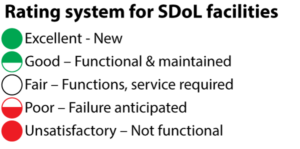
These assessments help identify maintenance needs and limitations that could affect a building’s future use. The findings inform comparisons between improving an existing school, constructing a new facility or using available space elsewhere.
Comparing facilities
Here’s a look at two facilities. The first, Wheatland middle school, is proposed for closure at the end of the 2028-2029 school year. Wheatland was built in 1955 and has not been comprehensively refurbished since, other than some improvements in in the 1980s. Each circle represents a component in each area of a building’s assessment.
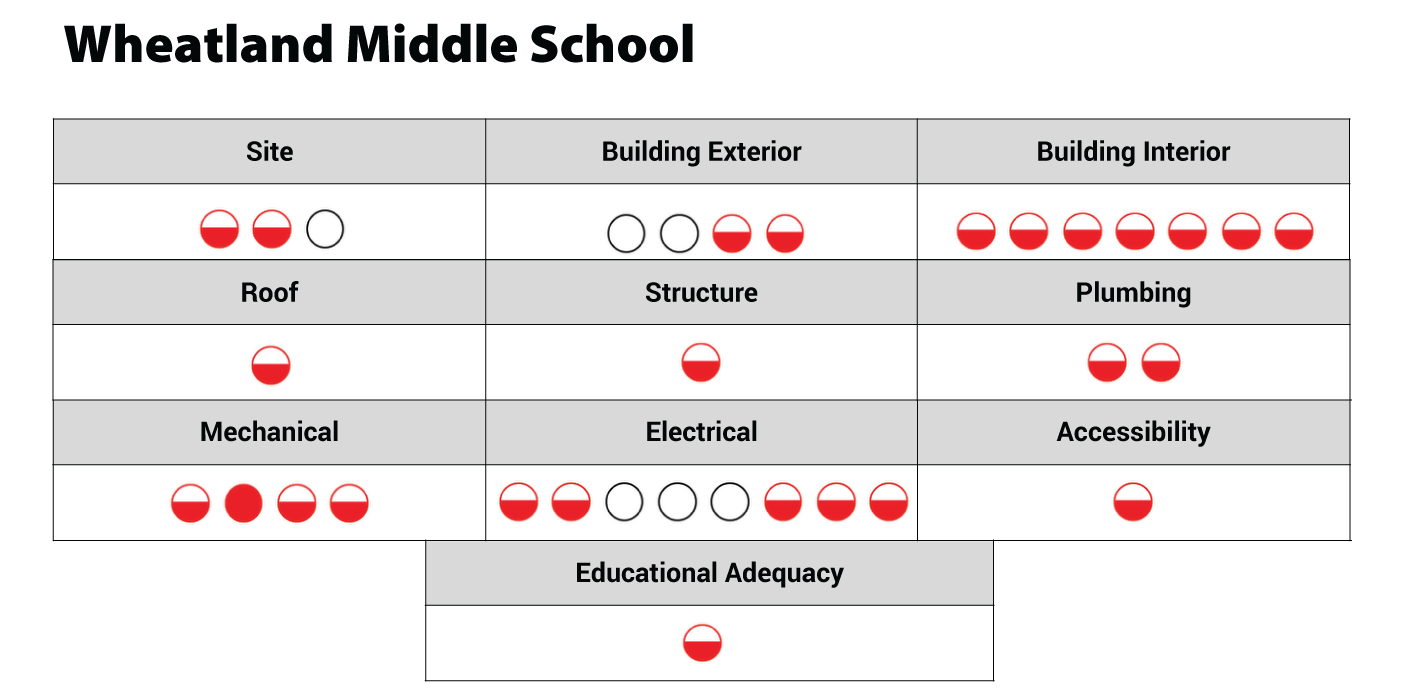
Assessors determined that several major building systems are approaching the end of their expected service lives. For example, replacement of Wheatland’s heating system would cost millions of dollars. At the same time, the building’s electrical infrastructure lacks the capacity needed to support full air conditioning throughout the building, a feature available in the district’s other middle schools. Upgrading those systems would require significant additional investment.
Now here is a look at the ratings of a different building, E.R. Martin, which is proposed to become a full middle school, serving students in the current Wheatland zone after it closes.
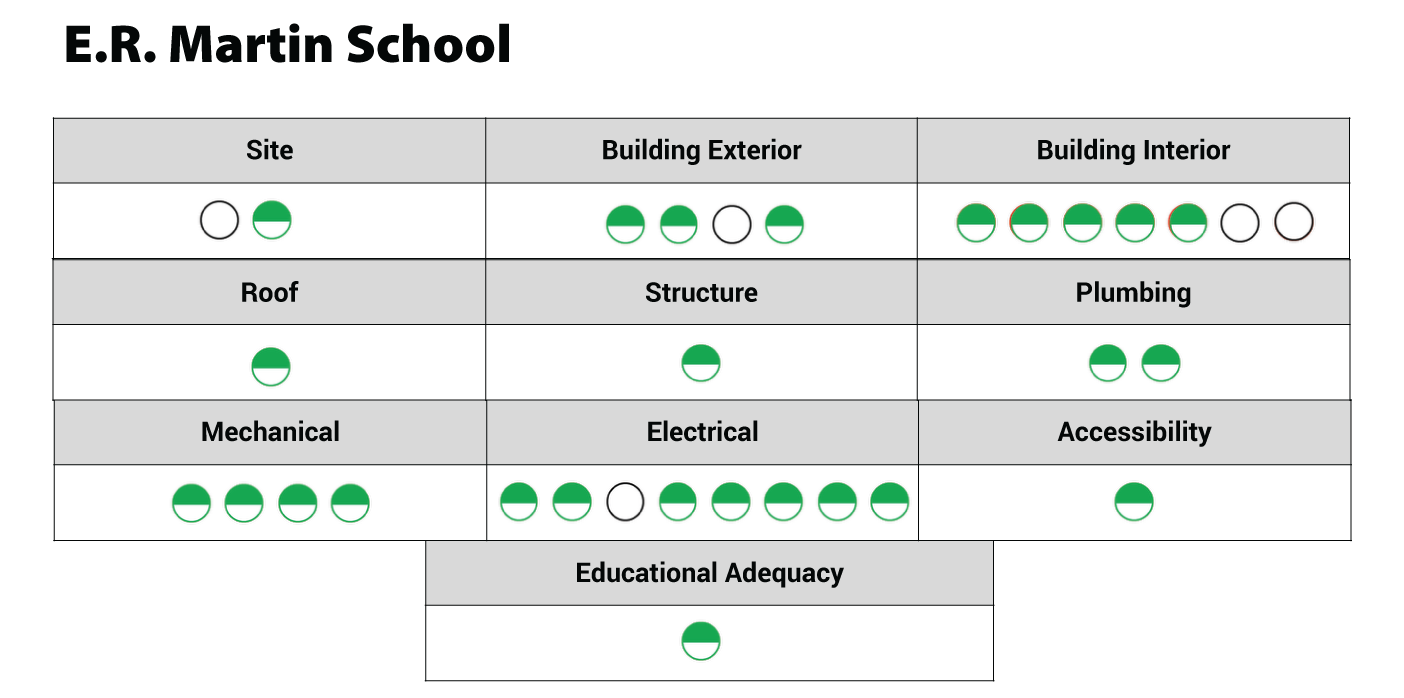
The facility assessments show significant differences between the condition of E.R. Martin and Wheatland Middle School, particularly in the areas of building systems, mechanical infrastructure, electrical capacity, accessibility, and educational adequacy. Those differences are one reason the administration included facility condition among the factors considered in its recommendation.
It also fits the modernize-rightsize-optimize commitments:
- It provides a modern facility to Wheatland students
- It takes offline an aging building that is no longer necessary as space for middle school students
- It optimizes an existing resource with minimal investment to accomplish both 1 and 2
Why facility condition matters
Facility condition is only one factor considered when evaluating the future of a school. Enrollment trends, educational programming, transportation, building utilization, neighborhood access, financial considerations, and community feedback all play important roles in long-range planning decisions.
However, the condition of a facility remains an important consideration because it helps the district understand the investments required to keep a building safe, functional, and capable of supporting modern educational programs.
The assessments discussed above do not determine the future of a school on their own. Rather, they provide objective information to help district leaders and the Board of School Directors evaluate options and understand the tradeoffs associated with each.
We also recognize that schools are more than buildings. Families, students, staff, and alumni develop strong connections to their school communities, and those relationships cannot be measured through a facility assessment. We understand why many Wheatland families have strong feelings about the recommendation currently under consideration.
As conversations about the district’s long-range facilities plan continue, the board will weigh facility condition alongside many other factors before making any final decisions. As part of our commitment to transparency, we will continue sharing the information and analysis that help inform those discussions.