

 School District of Lancaster facilities host a wide range of activities beyond the school day, from youth sports and nonprofit programs to community meetings and special events. Recently, community members have raised questions about facility rental fees and how the district determines who pays to use school buildings and grounds.
Use of school facilities is governed by School Board Policy 707, which was revised in 2024. Prior to the revision, facility use fees were often handled on a case-by-case basis. While many organizations benefited from access to district facilities, there was not always a consistent process for determining when fees would be charged, reduced, or waived. In some cases, similar organizations received different treatment, creating concerns about fairness and transparency.
The revised policy directs the district to establish a fee schedule for approved users while ensuring that “activities directly related to the educational program and operations” may use facilities without rental fees.
The policy requires district administrators to apply the fee schedule consistently while determining which organizations qualify for reduced or waived fees. Here’s how we worked this out:
Facility users are grouped into three groups, or categories, based on their relationship to the district and the students they serve. School-related organizations, including PTOs, booster clubs, school-sponsored programs, and certain educational or government partners, do not pay facility rental fees, although staffing costs may still apply. We call this Group One.
Groups without direct affiliation with SDoL pay rental fees by hour of use that vary by facility request. For example, an LGI room costs $40 per hour, while an auditorium costs $300 per hour. These rates were developed through a review of comparable local school districts, including Penn Manor, Manheim Township, and Dallastown, to ensure SDoL’s fees were aligned with regional practices. We call full-paying organizations Group Three.
We also recognize the important role many community nonprofit organizations play in supporting Lancaster students and families. That is why the policy created a middle category, Group Two, which receives a 50% discount on facility rental fees. This group includes local nonprofits that serve a significant number of SDoL students. The discounted rate is intended to help offset utilities and facility wear-and-tear associated with outside use. It is not designed to generate profit for the district.
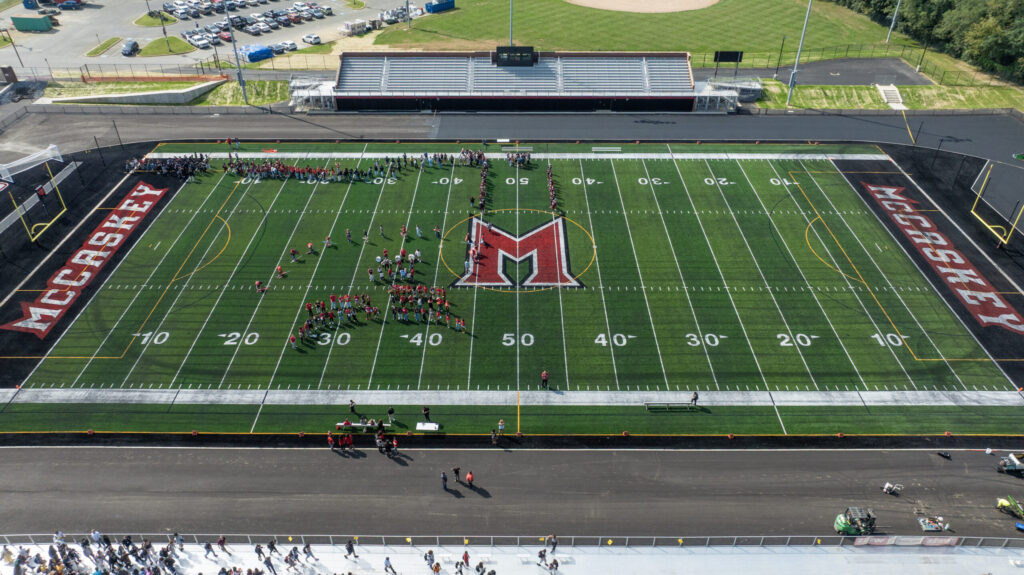
We should also note that one organization may be classified into different groups, depending on the event. For example, a nonprofit that provides programming during the school day as part of our curriculum is categorized as Group One. But if that same group holds a weekend fundraiser in our football stadium, it may be categorized as Group Three.
To classify organizations by group, we created a cross-departmental committee that reviews facility requests using the same criteria for every applicant. The committee includes representatives from facilities and operations, community partnerships, student services, athletics, technology, and school administration. Its role is to help ensure requests are evaluated consistently and in accordance with board policy.
The district continues to provide substantial discounts and fee reductions for organizations that serve Lancaster students and families. During the 2025-26 school year, which was the first year of implementation for the new policy, nearly 41% of facility rental fees were discounted or waived. Through September of the current school year, discounts and waivers have accounted for 76% of gross rental fees.
The district recognizes that its schools are more than places for teaching and learning. They are important community spaces that host programs, activities, and events that enrich the lives of students and families across Lancaster.
As community conversations continue, district leaders and the school board are listening carefully to feedback about the facility use policy and its implementation. The board may consider additional refinements to ensure the policy continues to balance community access, fairness, fiscal responsibility, and the responsible stewardship of taxpayer-funded facilities.
We remain committed to making our schools welcoming community hubs while ensuring that access to district facilities is guided by clear, consistent, and transparent standards. The goal of the 2024 policy update was not to limit community use of our schools, but to create a fair process that applies the same rules to everyone.